Penn Station is the nerve center of rail travel for the New York metro area — a dense, fast-moving hub where commuter trains, intercity services, and subway lines converge.
For millions of people who pass through each week, it’s both an essential link and an urban experience that can be efficient or chaotic depending on timing and navigation.
What it serves and how it’s laid out
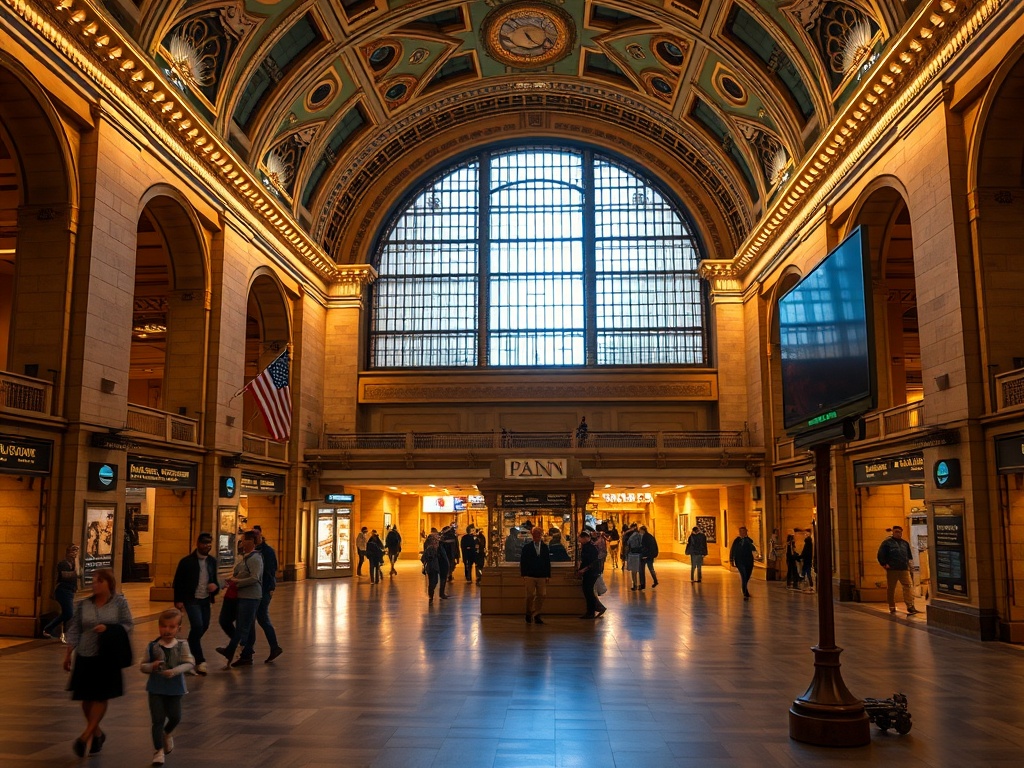
Penn Station connects three major rail providers: intercity service to points beyond the region, Long Island commuter trains, and New Jersey commuter lines. The station sits beneath a major arena and stretches between Seventh and Eighth Avenues, with multiple entrances and concourses stacked underground. A separate but connected facility across Eighth Avenue — a grand, daylight-filled train hall housed in a historic postal building — provides a more spacious terminal experience for many long-distance travelers.
Expect crowded platforms during peak periods, a mix of retail and food vendors, and a patchwork of signage that’s improved over time but can still be confusing for first-time visitors. Escalators, elevators, and stairways link platforms to street-level concourses and to nearby subway stations, so allow extra time if transferring between systems.
Practical tips for travelers
– Check train statuses on official apps or station monitors before arriving; delays are common during busy periods.
– Purchase tickets in advance when possible; many services allow mobile or ticket-machine purchases to avoid lines.
– Use the more spacious train hall for long-distance departures when available; it tends to be calmer than the older underground concourses.
– If traveling with luggage, pick entrances closer to your platform and allow extra time for navigating stairs or elevators.
– Keep an eye on personal belongings and use station lockers or luggage storage services if you have a long layover.
Amenities and accessibility
The station complex offers a range of dining and quick-service options, newsstands, convenience shops, and seating areas. Customer service booths and kiosks can help with directions, ticketing issues, and accessibility needs. Ongoing upgrades have increased elevator access and improved signage, making navigation easier for travelers with mobility needs, though occasional elevator outages still occur — checking status ahead of arrival is wise.
Safety and comfort
Rush hours are the busiest and most congested; if possible, travel outside peak windows for a calmer experience. Watch platform edge markings and announcements; transit staff are present on platforms and concourses to assist.
For security, follow posted guidance, and report unattended items or suspicious activity to station personnel or law enforcement.
Ongoing improvements and the future of the hub
Authorities continue to pursue projects aimed at increasing capacity, improving passenger flow, and enhancing connections between rail and subway services.
Plans emphasize more daylight, clearer circulation routes, and better amenities to meet growing ridership and reduce bottlenecks. Incremental upgrades are already visible in cleaner concourses, upgraded signage, and expanded customer spaces.
Why it still matters
As a transit spine for a major metropolitan region, the station remains indispensable for daily commuters and long-distance travelers alike.
With strategic improvements and careful planning, it has the potential to become not only more efficient but also a more pleasant gateway to the city. For anyone using the station, a bit of advance planning, awareness of peak patterns, and knowledge of the main concourse options will make travel through this bustling hub much smoother.