Penn Station: A Traveler’s Guide to Navigating New York’s Transit Hub
Penn Station remains one of the busiest transportation hubs in the country, serving Amtrak, Long Island Rail Road, NJ Transit and multiple subway lines. Its central location on 34th Street makes it a gateway to Midtown Manhattan, but the complex layout and constant flow of people can be confusing.
Use this guide to move through the station more efficiently and enjoy the best available amenities.
What to expect inside
– Multiple concourses and entrances: Penn Station stretches across several underground concourses and is connected to the newer Moynihan Train Hall across 8th Avenue. Each operator uses different boarding areas, so allow extra time to find your track.
– High foot traffic: Peak commuter periods are extremely crowded. Platform congestion, frequent track changes and packed stairways are common.
– Ongoing improvements: Recent investments have improved lighting, signage, retail and passenger amenities, but parts of the station still feel hectic compared with newer terminals.
Connections and transfers
– Amtrak, LIRR, NJ Transit and PATH all converge here, making Penn Station a major intermodal transfer point.
Confirm which concourse your carrier uses and follow operator-specific signage.
– Subway access: Several major subway lines run beneath or adjacent to the station, providing quick links to other Manhattan neighborhoods.
– Airport links: Regional airports are reachable via coordinated rail and shuttle services; check your carrier’s recommended routing and allow time for transfers.
Time-saving tips
– Check platforms before you travel: Track assignments change frequently. Use apps or station monitors for real-time updates shortly before departure.
– Use dedicated entrances for your carrier: Moynihan Train Hall serves many Amtrak departures and offers a less crowded alternative to the main Penn concourse for certain trains.
– Buy and store tickets digitally: Mobile tickets speed up boarding and reduce lines at ticket windows.
– Allow buffer time for transfers: When switching between operators or heading to the subway, add extra walking time for navigation and security checks.
– Travel light through the concourse: Narrow passageways and crowded platforms make wheeled luggage harder to manage during rush periods.
Amenities and comfort
– Food and retail: Several cafés, grab-and-go food counters and retailers operate in concourses and nearby streets.
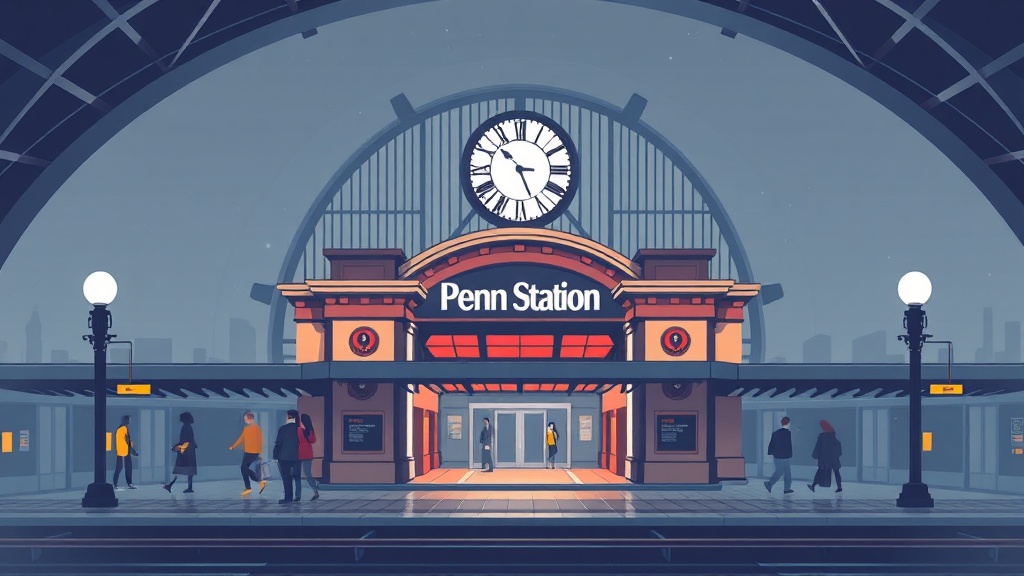
Moynihan Train Hall features a larger food hall experience for travelers seeking more space.
– Lounges: Amtrak and some carriers operate lounges for qualifying passengers; check membership or ticket class eligibility in advance.
– Accessibility: Elevators, ramps and accessible routes are available, but layouts vary. Look for operator maps and staff assistance if needed.
Safety and etiquette
– Keep belongings close and avoid leaving bags unattended.
– Let passengers off before boarding and form single-file lines where indicated.
– Announcements and digital displays carry essential updates—listen and look for platform changes.
Making the most of Penn Station
With careful planning and a few simple habits you can turn Penn Station from a stressful transfer point into an efficient gateway.
Use digital tools for live updates, choose entrances that match your carrier, and plan extra time for busy periods.
The combination of broad connectivity and ongoing improvements means Penn Station will continue to be a practical hub for city and regional travel for years to come.