Penn Station, known formally as Pennsylvania Station, is more than just a bustling transportation hub. A significant landmark located in the heart of New York City, it not only connects thousands of passengers to their destinations daily, but also tells a rich tale of architectural history, urban design, and city life.
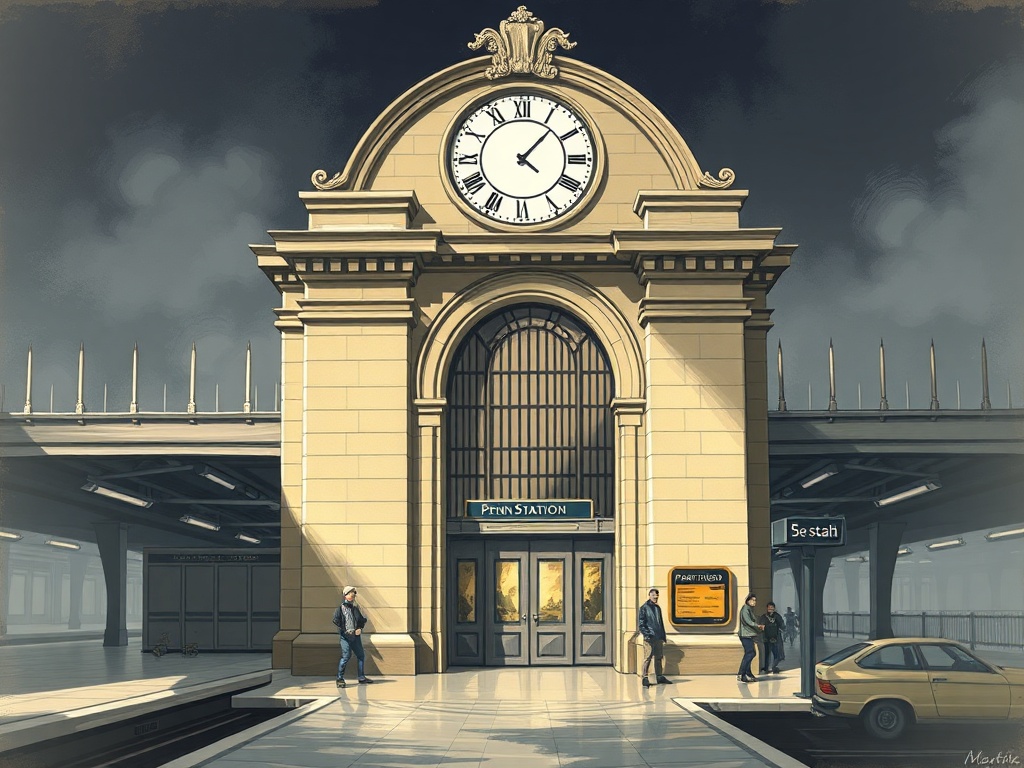
As the busiest rail hub in the Western Hemisphere, Penn Station serves more than 600,000 passengers on a typical weekday.
It’s a crucial meeting point for Amtrak, the Long Island Rail Road, and the New Jersey Transit. As such, it’s an emblem of New York City’s fast-paced lifestyle and its role as a central node in the national transportation network.
But Penn Station isn’t all about movement and transit.
It’s also a history book, chronicling the city’s evolution over time. The original Penn Station, built in 1910, was an architectural masterpiece designed in the Beaux-Arts style. It stood as a symbol of New York City’s grandeur, with its marble corridors and ornate, high ceilings. The loss of this structure to demolition in the 1960s sparked a public outcry and led to the creation of the Landmarks Preservation Commission, a significant shift in the city’s approach to conserving its architectural heritage.
Today, Penn Station continues to evolve. The recent unveiling of the Moynihan Train Hall has breathed new life into the station, marking a significant chapter in its timeline.
The new hall, housed in the century-old James A. Farley Post Office Building, is a nod to Penn Station’s former glory. It boasts a spacious, light-filled atrium and state-of-the-art amenities that enhance the commuting experience, blending functionality with aesthetic charm.
But the allure of Penn Station extends beyond its walls. Situated in the vibrant neighborhood of Midtown Manhattan, it’s surrounded by an array of attractions that make the city so captivating.
Just steps away is the iconic Madison Square Garden, renowned for hosting top-tier sporting events and concerts.
One can venture a bit further to discover the Empire State Building, Times Square, and the trend-setting High Line park.
The station’s location also positions it at the heart of the city’s gastronomic scene. From gourmet dining establishments to trendy food halls and classic New York-style pizzerias, there’s an eatery to satisfy every palate. And let’s not forget the shopping scene – a myriad of retail outlets, from flagship department stores to niche boutiques, are within easy reach.
Lastly, Penn Station plays a vital role in the city’s economic fabric. It’s a major employment hub, with many top corporations having established their headquarters in the vicinity. The station’s connectivity also fosters business by making it easier for workers, clients, and partners to meet and collaborate.
In essence, Penn Station is more than a gateway to New York City; it’s a microcosm of the city itself – bustling, diverse, and ever-evolving.
It encapsulates the spirit of movement, the appreciation for history, the love for food and entertainment, and the pursuit of economic growth that define the Big Apple.
Whether you’re a daily commuter, a tourist, or a history buff, Penn Station offers a unique perspective on urban life in one of the world’s most dynamic cities.